The Science Of Perception & Intuition
#4 Predictions – most of them unconscious- shape how you see the world
19 August, 2024
You are a prediction machine.
Now that we understand how the nervous system actively shapes perception in an attempt to keep us safe, we know that seeing the world is not a passive process.
Developing deep trust in your own instincts relies on the steps we’ve discussed previously: pausing with full embodied awareness and a recognition of what might be shaping your nervous system’s response. It requires you to learn to discern — is my response running off a prediction that is still valid, or something that shaped me from before? Discerning whether that instinct is leading you somewhere new or old and running on habit is what helps you tell when to trust that gut and when second-guessing yourself is worth the effort.
We don’t receive objective information; instead what we perceive is the result of a dynamic, constructive prediction process that happens largely unconsciously.
As Dr. Lisa Feldman Barrett says, “Predictions are the basis of every experience you have” or put another way “we predict ourselves into existence.” (Dr. Anil Seth, 2020).These unconscious predictions shape how we interpret and respond to the world and they exist for good reason, to help us manage our energy and move through life faster.
You’re probably familiar with Daniel Kahneman, who calls this System 1 thinking: fast, automatic thinking, running long before the slower, conscious reasoning he calls System 2 gets a say. By the time you feel like you’re weighing something up, a prediction has usually already been made.
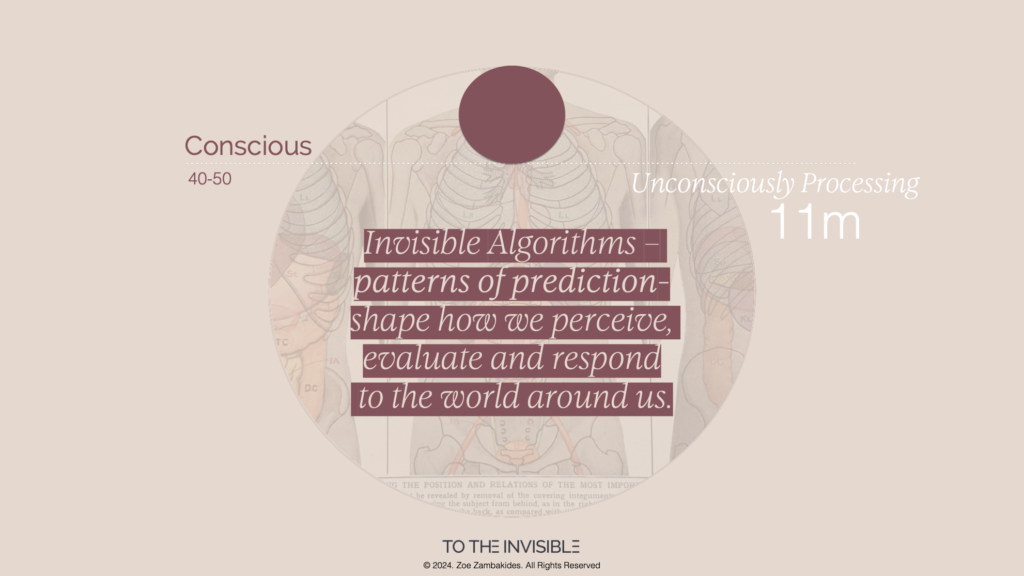
The Role of Predictions in Shaping Experience.
“We predict ourselves into existence…”
– Dr Anil Seth 2017
Most of your system’s energy goes on pattern recognition, not on processing each moment from scratch. Your Mind reaches for what it expects to happen, not what’s actually happening now. As Feldman Barrett puts it, neurons don’t “store” information—they “remember” it, reconstructing past experiences to make sense of the present.
What’s important to remember is that most of this processing is happening unconsciously with implicit ‘memories’ – i.e. ones we don’t actively remember.
This is why in neurobiology a memory is defined as ‘the way a past experience influences a process in the future’ (Siegel, 2012).
These unconscious algorithms shape how we respond to stress, how we view success, and how we interact with others. They even shape how we experience emotions.
Instead of feeling emotions objectively, our brain interprets signals from our body, using past patterns to make a “best guess” about what we are feeling. Often, these unconscious patterns are deeply embedded and difficult to change—unless we address them at a bodily level.
Antonio Damasio’s work on somatic markers talks about how this plays out in the body directly — a stored prediction becomes a bodily signal that steers a decision before conscious reasoning has finished.
Think of the example we mentioned in post one about violence increasing as the ambient temperature increases. We may imagine in a moment that we are agitated. Yet if we sink into a deeper awareness about what’s happening in our body, we may notice we’re deeply uncomfortable, unsettled. We may be able to notice its affect on our body and how we’re interpreting and reacting to what’s around us as a result.
Whilst the example of violence in rising temperatures is extreme, think about the last time you sat for ages uncomfortably at a desk or in a tense meeting? You probably didn’t clock the chair. You decided the meeting was dragging, or the person opposite you was being difficult, when your body was really just reacting to sitting rigid for forty-five minutes in a room with no air.
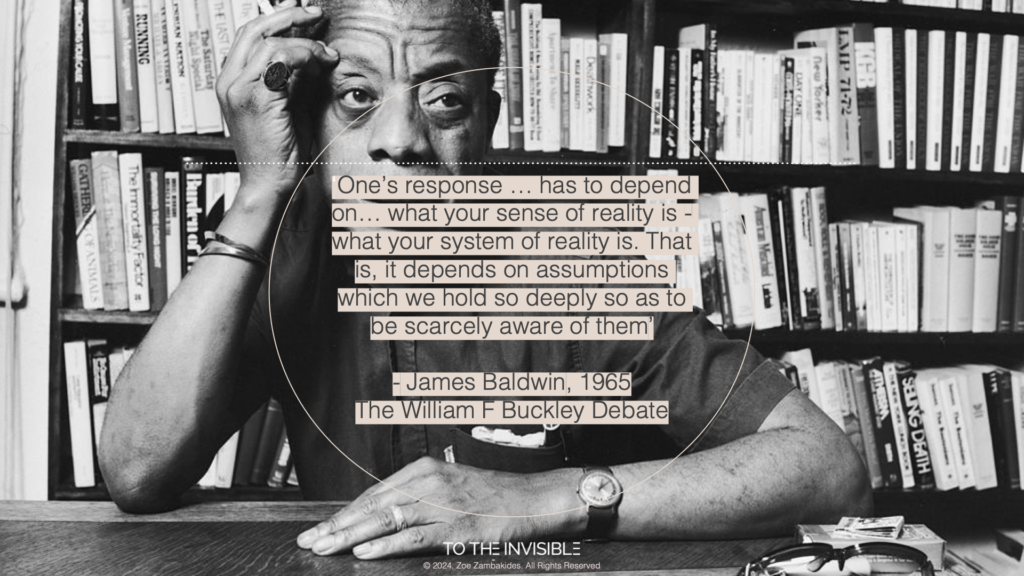
How an old prediction can feel so convincingly like a fresh instinct
So often we might feel like we have an instinctual reaction based on:
- How we respond to ‘stress’ – is it neurobiologically processed as a challenge we can overcome or a threat our nervous system needs to react to?
- How we see and experience success: what do we believe about it and how we achieve it?
- How we respond to criticism, conflict and change
- How we seek approval. What we do to be ‘valued’ and loved? Have we had to fight, struggle or strain to get where we are? Have we ‘sat’ on parts of ourselves to be accepted?
- How we ‘effort’: perfectionism and procrastination
- How we lead, and
- How we love.
So if your nervous system unconsciously neurocepts a cue in your present experience that matches a pattern stored unconsciously in your system from a past experience, your Mind begins to run a script for how it predicts the situation around you to be.
If that pattern of prediction expects that this is not a safe situation, you will think, feel and act accordingly. Remember in #1 we learned that these expectations shape what our spotlight attention focusses on – and in 3, how our nervous system responds.
Iwhy ‘thinking’ alone isn’t enough and can lead to even more second guessing of your instincts
“Typical self-help books focus on your mind. If you think differently, they say, you will feel differently… These books however don’t give much consideration to your body…” – Dr Lisa Feldman-Barrett 2017
You can rewire these algorithms, but you need to do it with your body- not against it. Which is Why a next-generation approach to personal development, that takes into account your whole neurobiological system, is so important.
When I first learned all of this I thought immediately of the mountains of modern self-help gurus proclaiming ‘change your thoughts, change your reality’. It had always jarred and now I knew why.
This why discerning a gut instinct to follow versus an old pattern that might not be right cannot be a purely mental exercise.
Anyone looking for gentle, lasting trust in oneself – and which instincts to follow needs – to take into account how your whole bodily-system is involved in perception, these deeper algorithms at work and how your context is everything: these algorithms are deeply unique to who you are as a person and they exist for a reason.
And as I’ve explained over the last three articles, this is why learning to be truly in present moment awareness – rather than the ‘remembered present’ – requires slowing down, tracking your sensations and syncing with your whole body and nervous system.
This also applies to discerning what instincts to trust. When something feels urgent or certain or true, it helps to get curious rather than launch into rational interrogation of your own wiring. Not “what predictions are stored in my system and why,” which just puts your thinking mind back in charge of a question it was never built to answer. More: what do I actually feel I need to do here to be successful? What’s made me feel accepted before, and is that still true now?
A few gentler questions worth sitting with, rather than solving:
- Sitting in a meeting about a big decision — the investor round, the promotion, the next project — what am I actually feeling underneath the “yes, obviously” answer I’m supposed to give?
Telling a partner “I think I want to change my job” and then rowing back — was that an old script about what’s allowed?
None of these questions necessarily lead to the right answer, but they give you a way into understanding the wider invisible framework shaping what you see and what feels instinctual. from there you canstart to really discern what to trust.