Fuelling your personal development through your unconscious
2 September, 2024
Once we understand the principles behind how we perceive and process the world, taking a depth psychology approach to how we see our Self and our personal development becomes transformative.
“We call the unconscious nothing, and yet it is a reality in potentia…Consciousness grows out of the unconscious…The thought we shall think, the deed we shall do, even the fate we shall lament tomorrow, all lie unconscious in our today… Hence we must always reckon with the presence of things not yet discovered”
– C.G. Jung, Archetypes of the Collective Unconscious 1968
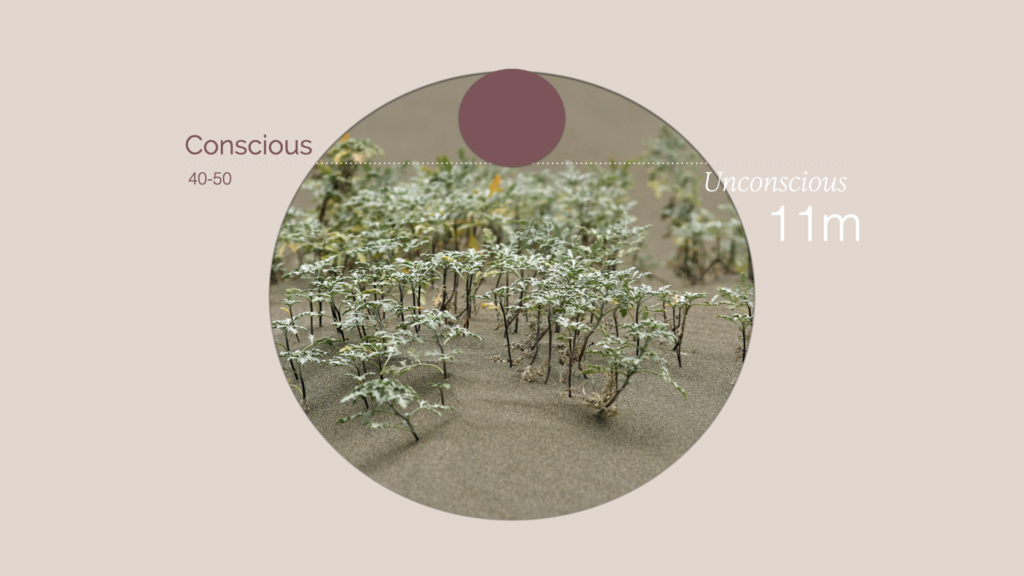
“Consciousness grows out of the unconscious…”
– Carl Jung,
A depth psychology approach simply means taking into account the impact of the unconscious on our conscious lives. Whilst Freud, the founding father of psychoanalysis believed the unconscious was a repository for all that we wished to repress, it was his successor Carl Jung who broke from his teachings and explored how the unconscious was a vast repository of collective potential – not just negative repressions.
Jung’s work has given rise to phenomenal pioneers in uncovering our unconscious gold, like Marion Woodman – who pioneered body work – and Ira Progoff – who pioneered journalling.
Whilst there is no definitive model and many worthy scholars have created different versions, there are five things to be aware of:
- Our Persona: These are the masks we wear. The face we present to the world. They may be roles we play.
- Our Ego: This is often spoken about negatively unnecessarily, but the Ego is our conscious navigator. It can be our sense of who we are in the moment and is constantly trying to integrate new things it encounters and make sense of our identity.
- Our Personal Unconscious: Think of this an unconscious programming unique to us all as individuals. This will be highly linked to the our personal experience and the algorithms we’ve laid down as a result about how we percieve the world.
- Complexes: in neuroscience terms, these are the neurons that have wired together so automatically fire together. Think of them as a cluster of associations around a certain experience or stimulus. A complex is triggered when we have an instantaneous reaction we don’t feel we can control, perhaps an intense emotion or thought. (You may now notice this in the common vernacular… ‘oh they have such a power complex..’ for example).
- Shadow: this is the part of our unconscious we don’t usually want to look at. The things we feel ashamed or guilty about. Our cognitive biases. The thoughts we don’t want to think. Parts of ourselves we don’t want to acknowledge Often our projections onto other people reveal our shadow. You hear a lot these days about ‘Shadow Work’ but what’s important to remember is Joseph Campbell’s phrase ‘ the cave you fear to enter, holds the treasure you week’. Ever hero has to face the shadow and they return with gold.
- Our Collective Unconscious: think of this as the global, historical shared repository of the human experience. I’ll go into archetypes another day but Joseph Campbell speaks to why there are so many shared stories across cultures and ages – the speak to the unique shared aspects of the human experience.
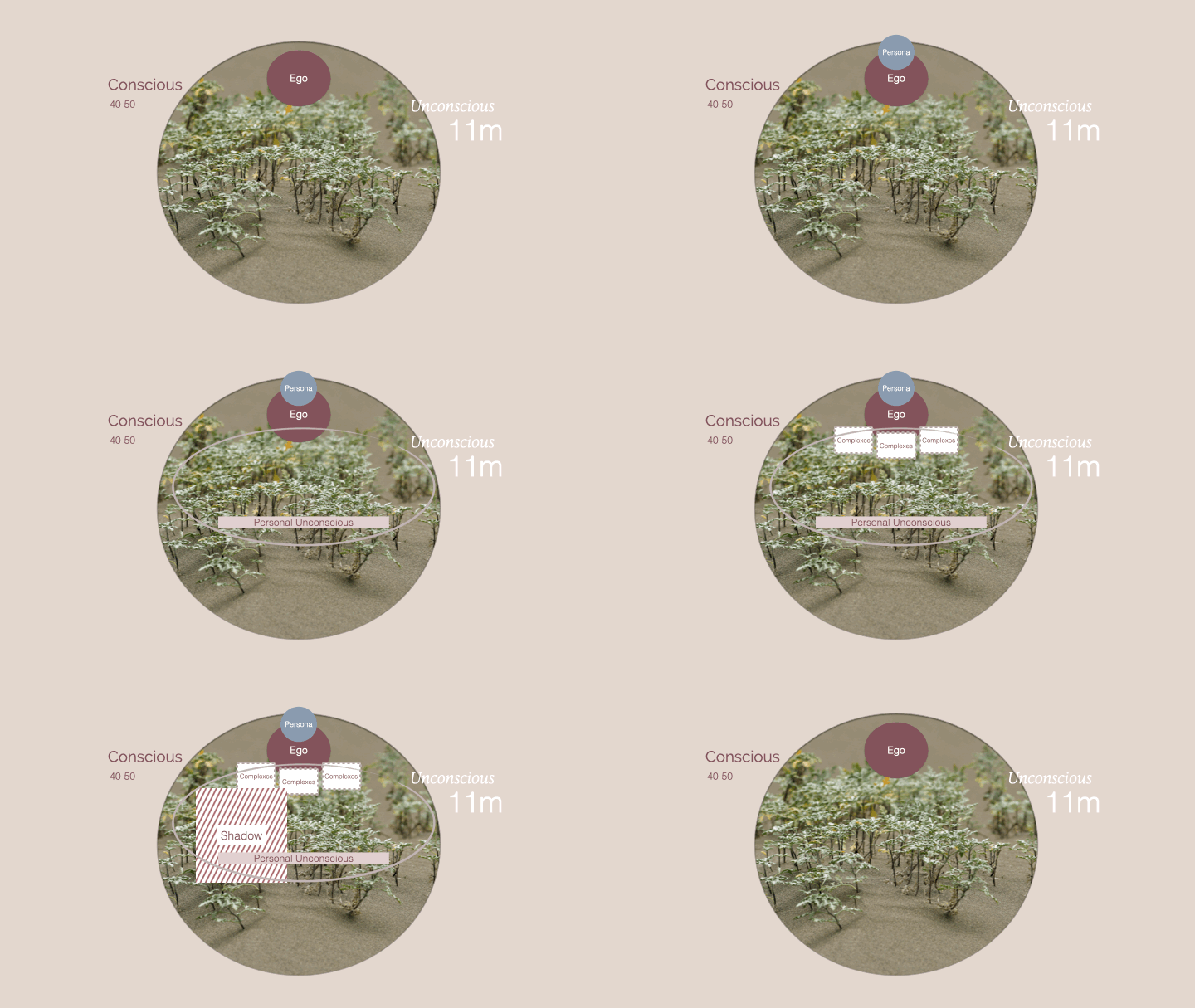
Jung described the process of the conscious Ego coming to know the whole self – the Psyche- more deeply. Integrating what it learns into conscious growth he called the process of individuation.
Individuation he said was what it was to be human: to experience the fullness of life. To Learn. To Grow.
It is not a destination. It’s a way of knowing oneself and evolving.
Fuelling your individuation with the organic psyche:
“What shape waits in the seed of you to grow and spread its branches against a future sky?”
– David Whyte, What To Remember On Waking
Ira Progoff described the whole Self as the ‘Organic Psyche‘. Like a seed becoming a tree, he said, we are not determined alone by our past but by the potential inherent in each seed and how we give it space to grow.
“The unconscious, as the seed aspect of personality, contains all the possibilities for future experience. It is unconscious specifically because it has not yet been lived”. – Ira Progoff, 1970
“The growing plant sprouts a sapling on its right hand side, and when this is completely formed, the natural urge to grow will not develop beyond the final bud but flows back into the stem, into the mother of the sprig, paving an uncertain way in the stem, and finally finding the right position on the on the left where it sprouts a new sapling. but this new direction of growth is completely opposed to the previous one. And yet the plant nevertheless grows regularly in this way, without overstraining or disturbing its balance… We should grow like a tree that does not know its law. We tie ourselves up with intentions, not mindful of the fact that intentions are the limitations, yes, the exclusion of life …
– Carl Jung, The Red Book
From this perspective, when we work with what is emerging in the unconscious we don’t necessarily know what direction our growth is going to take. But we are working with an organic psyche that has an intelligence often far beyond what our conscious mind can construct and is balancing out what needs to be addressed before we take our next step.
We may consciously want to work on something, get to a specific destination. Yet our psyche may have a complex, a belief, a pattern of prediction it needs to unwind first, before it can take the steps to get there.
In fact the very thing we might think we want, might be a product of those very complexes or beliefs. We let them unfold and a new dream or ambition may emerge.
Learning to listen to our unconscious
“Both are important aspects of life. Consciousness should defend its reason and protect itself, and the chaotic life of the unconscious should be given the chance of having its way too – as much as we can stand. This means open conflict and open collaboration at once. That, evidently, is the way human life should be'” – Carl Jung, CW 9, 288.
When we have learned to cultivate present moment awareness to get ahead of our predictive patterns and work to keep our nervous system safe and open, we have the resources to begin to explore our unconscious. Navigating unconscious dynamics can feel like an overwhelming place if we aren’t able to navigate it safely. Without these skills, especially going it alone, it’s easy to get lost in the shadow or caught up in complexes.
Jospeh Campbell dedicated a lifetime to how myths help open up our conscious minds to the call of what’s within. Ira Progoff developed a deep journalling system. Marion Woodman created BodySoul movement work. Stephen Aizenstat has developed DreamTending. Marian Dunlea, BodyDreaming, where she combines dream and body work.
All of these speak to the methodologies behind ToTheInvisible’s journeys and the basis for a next generation approach. The important thing to remember is that we can’t get their through conceptual self-awareness alone. So widening our sense of embodied self-awareness is always the first step.
As you ground in your embodied present moment awareness you might want to ask yourself- what song lyrics speak to you right now? What story or image moves you? What dream visited you last night? What sensations are moving in your body? Where did you imagination take you in that daydream? Things we haven’t learned to conceptually dismiss as illogical are often the road to a subtle but profound insight into what we are unconsciously processing.